
Available now
Kindle ebook
Read instantly on Kindle devices and the free Kindle app.
Buy on KindleNon-fiction · Public health
How a Multi-Billion-Dollar Water Reuse Industry Threatens Public Health
“Do not drink.” But what about breathing the aerosols? Recycled water meets the rules when it leaves the treatment plant. In the purple pipes beyond, biofilms can harbor Legionella—and sprinklers turn that water into mist in the places where people live, work and play.
Paperback coming October 5

About the book
Across California and far beyond, cities pump treated wastewater through miles of purple pipe to irrigate parks, schoolyards, golf courses, and neighborhood landscapes. It’s sold to the public as a sustainability success, and leaving the plant it meets the rules. What happens beyond that point is barely watched. In the pipes between the plant and the spray heads, biofilm can harbor Legionella and other opportunistic pathogens, and emerging contaminants can pass through the plant largely undetected. Sprinklers then release whatever the water carries as a fine mist into the air people breathe.
Purple Peril is an investigative look at that gap. Drawing on peer-reviewed science, public-health data, cross-connection case histories, cost and investment records, and the author's own experience in a court petition against his city, it shows why "no evidence of harm" is not the same as evidence of safety. It does not argue against water reuse. It argues that a system which never measures and controls what reaches a lung cannot be called safe. It closes with practical fixes: monitoring where exposure happens, low- or no-aerosol irrigation where people gather, and honest public numbers.
This book is for utility managers, engineers, regulators, and public-health officials. It informs decision makers: city councils, water boards, school boards, parks directors, and HOA managers who approve and schedule the spray. It also equips the parents, teachers, groundskeepers, and residents who live downwind of wastewater aerosols with the knowledge to ask the right questions. If your decisions put recycled water into the air, or you live downwind of those decisions, this book is for you.
The problem
Municipal water reuse has a blind spot. California’s Title 22 does not impose requirements to police the recycled-water distribution system—the “purple pipe” network that carries treated wastewater from the plant to the sprinkler head.
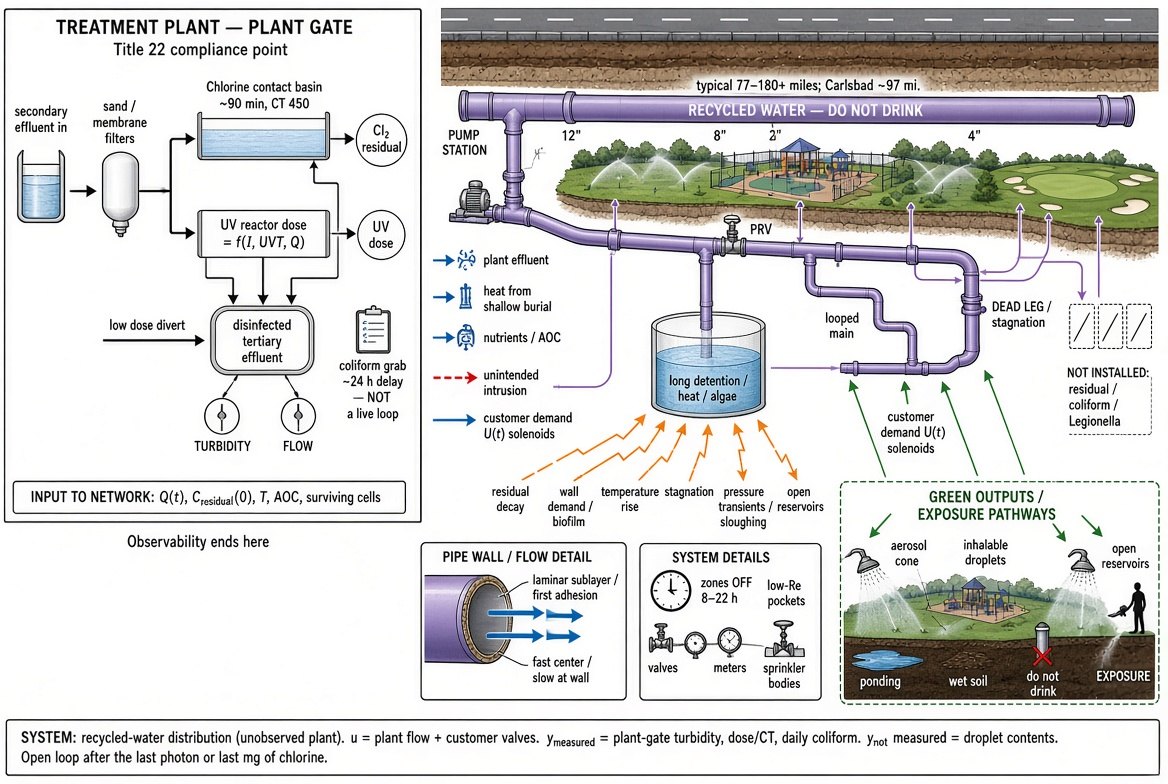
Recycled water meets the rules as it leaves treatment. What happens to it in the miles of pipe beyond that point is barely watched.
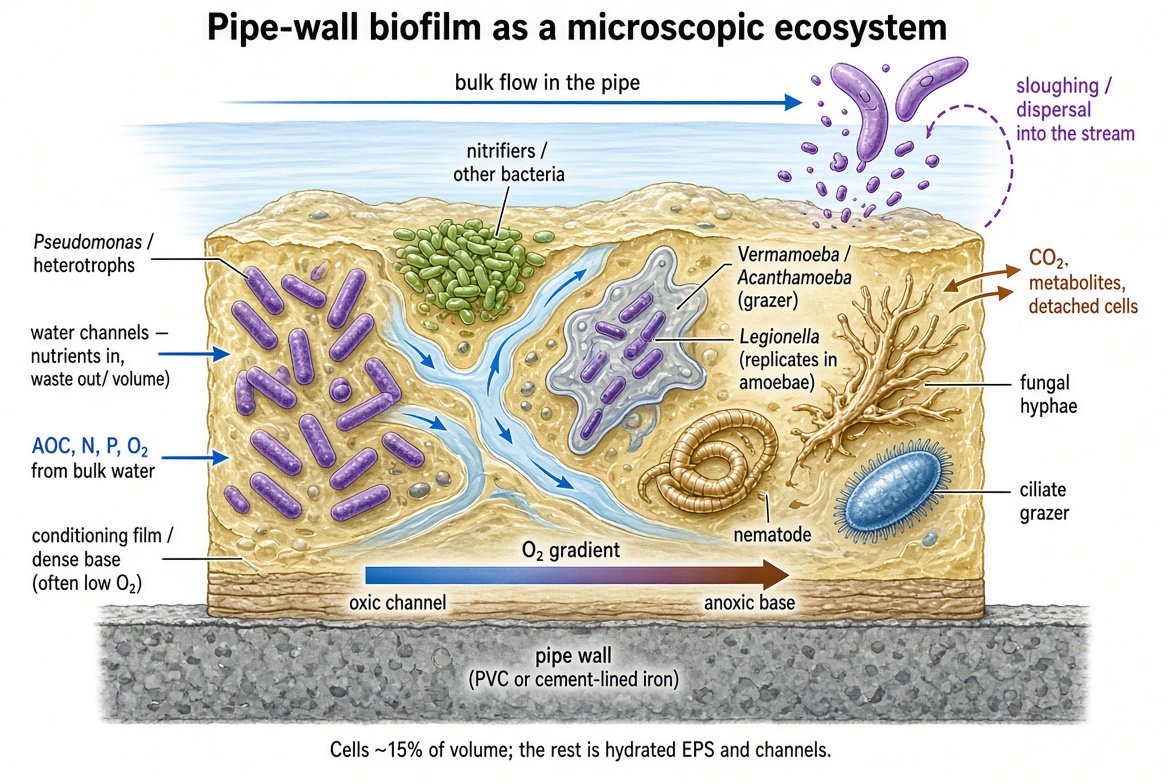
Biofilms can form on the walls of the distribution system and harbor pathogens such as Legionella.
Irrigation releases that water as aerosols in parks, schoolyards and neighborhoods—air that people in urban communities breathe.
The book closes with remedies: monitoring where exposure happens, low- or no-aerosol irrigation where people gather, and honest public numbers.
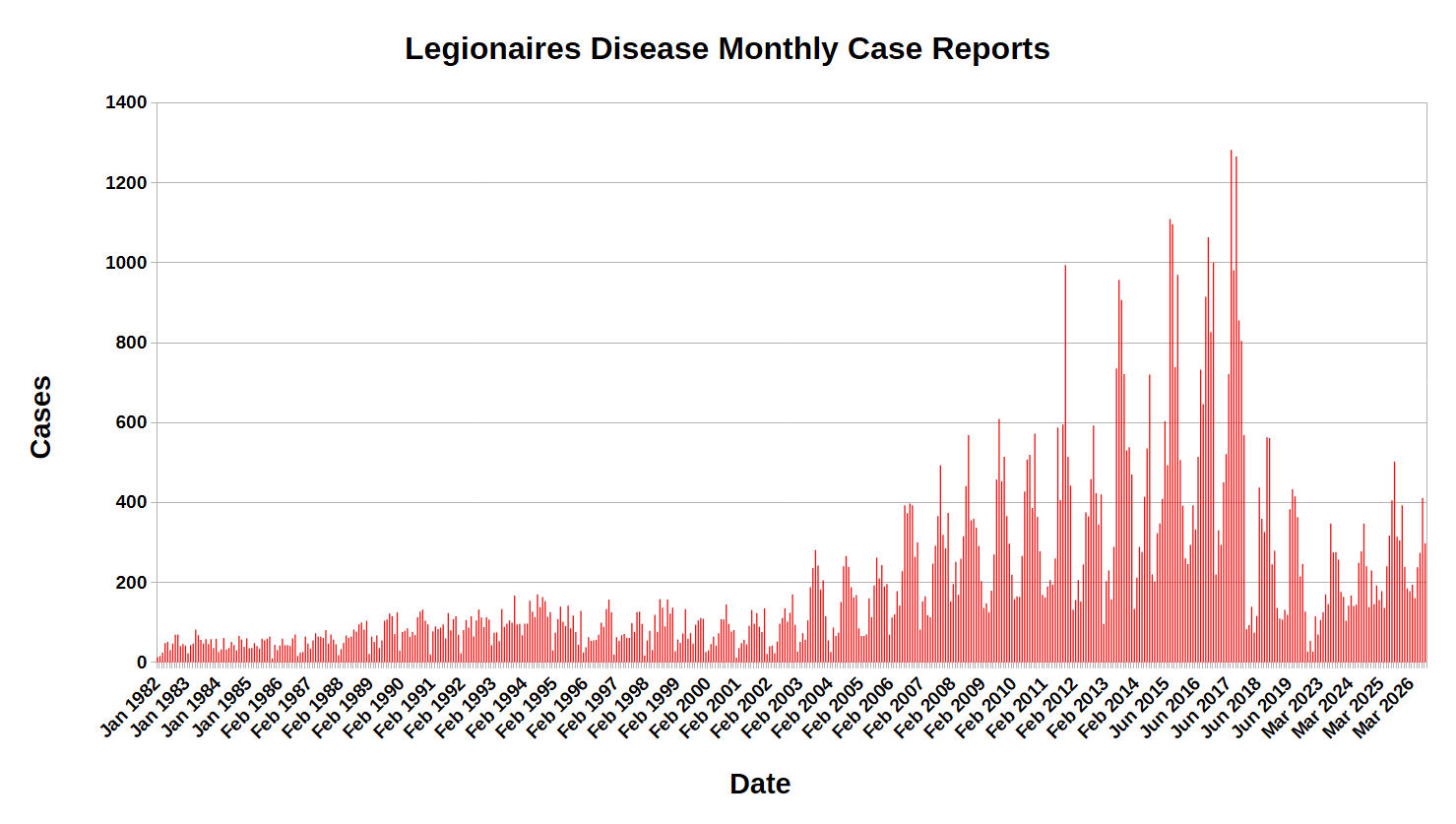
Monthly case reports of Legionnaires’ disease, the illness caused by Legionella, climbed steeply after the early 2000s.
Why I wrote this
I recognized this gap through personal experience and research, and I decided something had to be said.
I started at home. I tried to engage my own city through council meetings and hearing protests. When the city failed to address the problem, I filed a petition for writ of mandamus on my own behalf, pro se, asking the city to show cause or cease and desist. The city prevailed on a demurrer, and the case was knocked out on process—the merits were never heard.
I could appeal, or I could walk away. Then I realized there was another way: write this book, and argue on a global stage the merits I tried to bring before the Superior Court.
My hope is that it gains enough traction that something is done to improve the health of urban communities.
That means one of two things: either solving the distribution problem—which I believe is economically intractable—or redirecting the billions sunk into purple pipe infrastructure toward improving the resiliency of our potable water systems.
— Mike Borrello
Get the book
Available now
Read instantly on Kindle devices and the free Kindle app.
Buy on KindleComing October 5, 2026
The print edition launches October 5. Check back here for the link.
Paperback Oct 5Stay informed
Be the first to hear when the paperback is available, along with news about the book.
Email signup is coming soon.
Questions, media or speaking requests? Get in touch.